
Special Slots Open For: 16 September 2026.
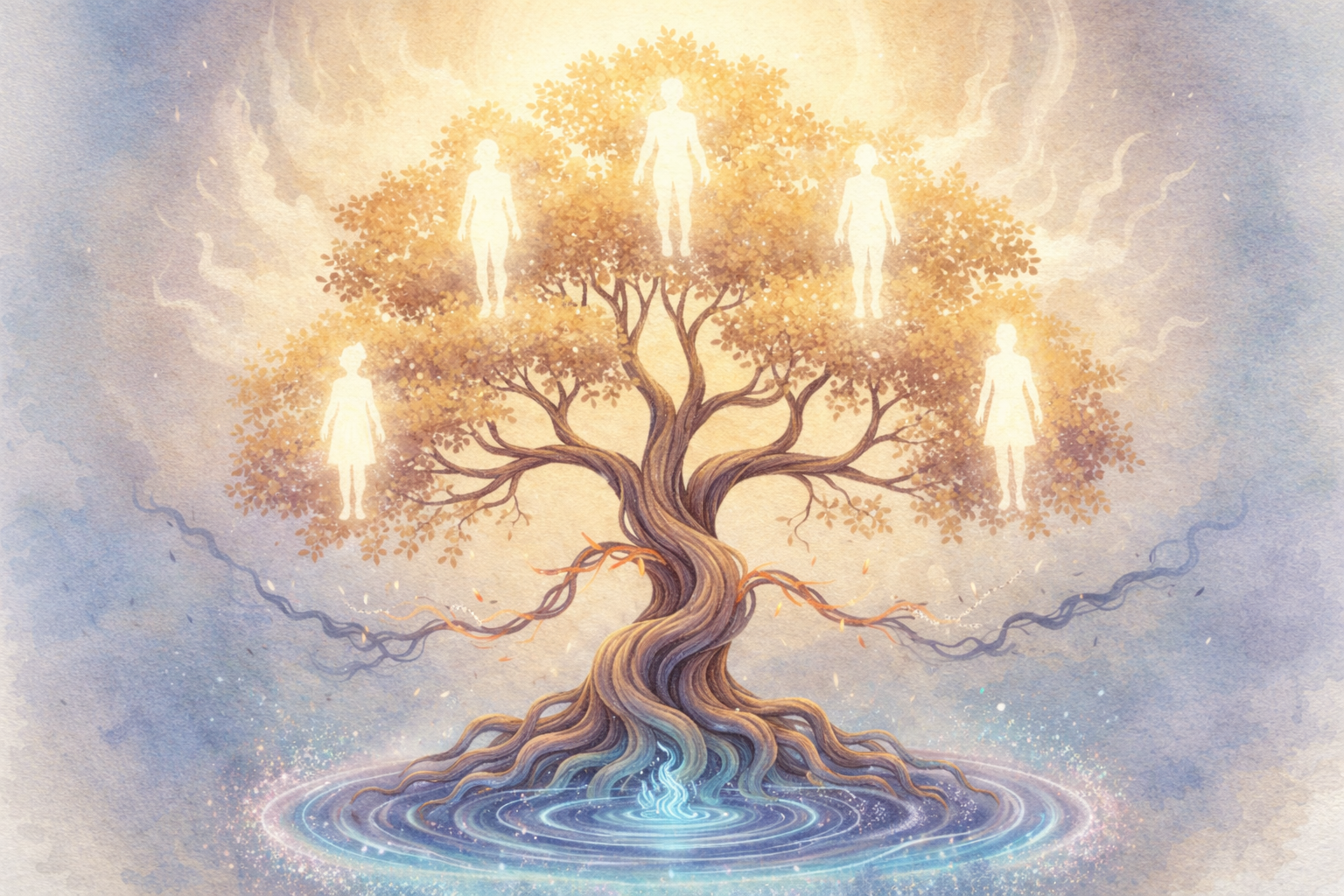
At times, difficulties an individual faces don’t start with themselves. There are instances where we carry inherited emotional wounds, unhealthy relationships or behaviours, heavy emotions, and fears. Here, it can help to explore ancestral lineage healing.
Ancestral lineage healing involves acknowledging inherited emotional patterns, which need to be let go of to allow for growth in life. In this case, people develop self-awareness to become better versions of themselves in the future.
Our forebears have had challenges such as war, poverty, grief, betrayal, emotional repression, and survival issues. Such experiences might shape family values, behaviour, and emotional traits that are passed down from generation to generation without our awareness.
Epigenetics refers to the study of how environmental factors influence gene expression. According to some scientific findings, certain biological changes caused by stress or trauma may be transmitted from one generation to another. Scientists have found that this could cause certain biological imprints to form that may be carried over from one generation to the next.
Children pick up emotional patterns from their home environment. Emotions like fear, anxiety, emotional numbing, and survival mechanisms can be passed down unconsciously through generations. With time, these emotional patterns become deeply familiar to them and are unknowingly repeated in adulthood.
Some people feel emotions beyond their own individual experiences to explain why this is happening to them. Consistent anxiety, guilt, sadness, people-pleasing, the fear of being abandoned, and the inability to accept love might be attributed to the transmission of emotional programming.
For instance, if our ancestors had been exposed to unstable, treacherous, impoverished, and emotionally deprived environments, they would have adapted behaviours that carried on within the family.
Often, generational trauma manifests itself as recurring emotional or lifestyle patterns in your day-to-day activities. In many cases, individuals unknowingly carry certain emotions, fears, and coping behaviours that are ingrained in them from one generation to another.
Repetitive issues in your relationships, emotions, or negative behavioural patterns can sometimes be attributed to deep-rooted family conditioning and inherited emotional responses. In other situations, an individual might subconsciously replicate emotional patterns from their surroundings because such behaviour was part of the family dynamic for generations past.
Another warning sign of living with generational trauma is unexplained fear, feelings of guilt or shame, and emotional heaviness despite a lack of reason in the person’s current reality. At times, certain emotional behaviours can be related to inherited survival mechanisms and trauma experienced by one’s ancestors.
It is common to inherit subconscious beliefs about safety, self-worth, responsibility, and emotions.
Examples of such family patterns include financial struggles, emotional distancing, unhealthy relationships, and the sacrifice of one’s own needs for others’ well-being. In this case, a family can pass on fears, coping strategies, and other behaviours to their children and grandchildren.
For instance, a family that grew up in poverty can live according to the principles of scarcity for no reason. At the same time, it might be challenging to overcome emotional suppression and dysfunctional relationship models.
Many individuals who deal with inherited baggage can feel emotionally spent, distant, or unable to experience joy in life. It is possible to feel an unnecessary burden of emotions that one should not be responsible for.
Some people experience a sense of emptiness or detachment from the rest of the world and from those around them. In certain cases, they might actually be dealing with inherited emotional pain.
When emotional issues are addressed and released, change is created not only for the current generation but also for those who come after us. It is important for both the present and the future that both generations can heal themselves.
Once an issue is recognised and dealt with successfully, future generations won’t have to experience the same issues that may haunt family members for generations.
By cultivating healthier interactions, emotional honesty, emotional intelligence, and self-awareness, a single person can break a long-standing unconscious cycle.
Today’s society is often characterised by people feeling disconnected from their emotions.
Ancestral healing allows you to look inward and understand how things work. It promotes mindfulness and the realisation that we are dealing with our own past traumas and emotional issues.
The more aware you become of where you come from, the stronger your sense of connection, belonging, and resilience becomes.
This process often serves as a reminder that people are part of a larger narrative of survival, resilience, and wisdom, which can provide emotional grounding and a stronger connection to one’s history.
Ancestral lineage healing involves understanding inherited patterns, consciously addressing unresolved emotional pain, and living and communicating in healthier, more constructive ways.
Initially, one needs to recognise specific behavioural, emotional, and communicative patterns, triggers, and issues that do not entirely belong to the individual but have been inherited from one’s family.
For example, individuals tend to become aware of recurring relationship patterns, fears and worries, issues with expressing emotions, financial instability, and self-worth problems, which appear to run in the family.
It is crucial to remember that not all inherited emotions are toxic. People inherit not only traumas but also resilience, wisdom, creativity, and strength.
Ancestral lineage healing does not involve denying your family or lineage; on the contrary, it helps individuals determine which ancestral emotional patterns to heal and which qualities to utilize.
Spiritual practices such as prayer or meditation can help individuals build emotional and spiritual connections with their deceased relatives.
In many cultures, there is a concept of “well ancestors,” who possess knowledge, wisdom, and love and can guide people during healing sessions.
Healing can include therapy, journaling, meditation, breathing techniques, and spiritual healing, which help release emotional baggage and cultivate better ways of being.
The point isn’t to forget the past, but rather to clear out any unresolved emotions with understanding and kindness. Eventually, people tend to live with greater emotional balance than in the old patterns they were stuck in.
Once the emotions have been cleared, people usually report feeling lighter, more confident, emotionally free, and deeply connected within themselves.
In addition to clearing emotions, many people rediscover positive traits of their ancestors they had forgotten, including resilience, intuition, courage, compassion, and inner strength.
Ancestral healing doesn’t have to be a long, difficult ritual process. Simple steps are all you need to get started. The first step in the process of ancestral healing is simply becoming aware of yourself and your family patterns.
The first steps in ancestral healing involve observing family patterns and emotions without obligation or judgment.
It isn’t necessary to find healing or answers immediately. Becoming curious about your emotions and the recurring belief patterns you see in your family can gradually open you to greater emotional awareness and a deeper understanding.
Simple exercises to do include:
Simple practices like these help create emotional connection and awareness.
While it is easy to focus solely on the suffering of your ancestors, never forget the strength, wisdom, courage, and endurance your lineage possesses.
Sometimes, working with your well ancestors feels like an emotional grounding and a support mechanism because it helps you feel connected and like you belong somewhere.
If you feel too emotional or overwhelmed and do not know where to start, guided support from a specialist will help you navigate your emotions.
Some emotions passed down through your lineage might be too difficult for you to explore alone. In such a case, you need a professional to help you work through your feelings with more empathy and understanding.
The topic of ancestral lineage healing revolves around recognising everything we have inherited from our ancestors and determining which aspects to pass on. Each person inherits strengths and emotional baggage from their predecessors.
Recognising inherited behavioural and emotional patterns allows one to shed what no longer fits while maintaining all the wisdom passed down through the lineage. Once an individual heals, their future generations can also benefit.
Master Vani Kabir has worked with many people, facilitating their healing process of releasing inherited emotional baggage and embracing emotional freedom and awareness.